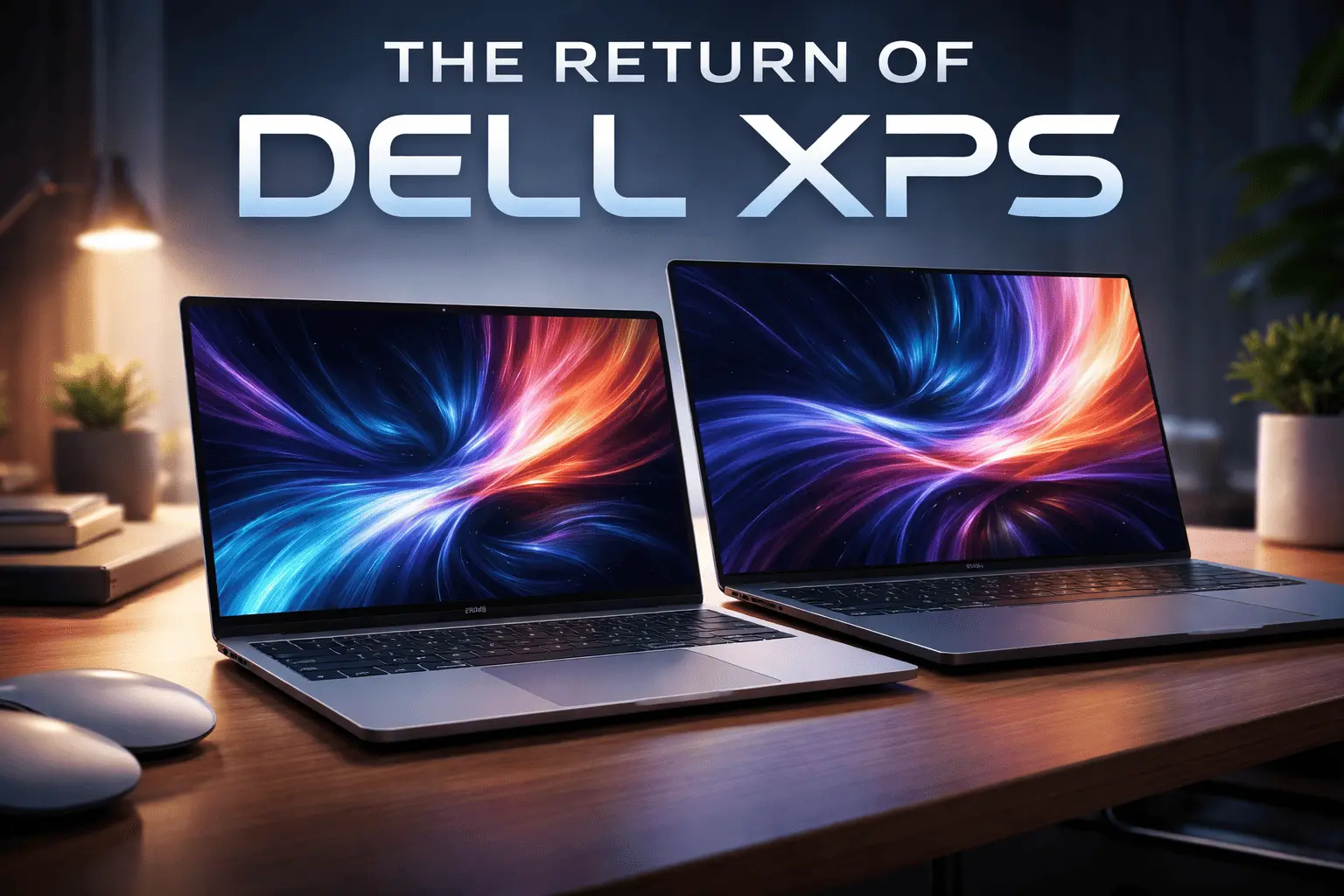
Dell’s decision to revive the XPS brand in early 2026 is more than a product launch—it is a strategic course correction. After a year of confusing branding decisions and the overhyped promise of “AI PCs,” Dell is signaling a return to what consumers actually value: reliability, comfort, and thoughtful design. In an industry chasing trends, this move acknowledges that fundamentals still matter.
The Branding Misstep of 2025
Last year, Dell retired its long-standing XPS, Latitude, Inspiron, and Precision lines, replacing them with generic tiers like Dell, Dell Pro, and Dell Pro Max. Each tier had multiple versions, from Base to Premium. While the intent was simplification, the outcome was brand confusion.
XPS, in particular, had represented a clear promise: premium materials, lightweight construction, high-quality displays, and dependable performance. Its removal left consumers uncertain about what they were buying, erasing decades of brand trust overnight. Sales reflected this miscalculation, and Dell quickly realized that simplifying names cannot replace the reassurance of a familiar, respected brand.
Experimentation That Went Too Far
At the same time, Dell pursued radical design experimentation. The XPS 13 Plus introduced in 2022 eliminated physical function keys, replaced the touchpad with a borderless haptic version, and replaced traditional keyboards with flat, lattice-free layouts. While visually striking, these choices compromised usability.
Users struggled to type comfortably, navigate the touchpad, and adapt to unfamiliar function keys. Aesthetics had triumphed over practicality, and daily workflow suffered. Dell’s design philosophy, focused on futuristic minimalism, had unintentionally alienated the people who relied on these machines every day.
The 2026 XPS: A Return to Usability
With the 2026 XPS 14 and XPS 16, Dell is quietly correcting course. Physical function keys are back, touchpads now feature visible borders, and the keyboard experience is more comfortable. The upcoming XPS 13 promises a traditional chiclet layout for those who prefer it.
This isn’t a retreat; it is refinement. Dell recognizes that innovation should enhance the user experience, not create frustration. By balancing modern design with familiarity, the new XPS models bridge the gap between style and function.
Stepping Back From the “AI PC” Narrative
Perhaps the most significant shift is in Dell’s messaging. During 2024 and 2025, “AI PCs” dominated the conversation. On-device AI, Copilot+ integration, and neural processing units were presented as essential reasons to upgrade. Today, AI is secondary.
Dell’s website and marketing now highlight portability, battery life, display quality, and build materials—features that truly influence purchasing decisions. The shift reflects a key insight: most consumers do not prioritize AI capabilities that remain largely invisible in daily work. Cloud AI suffices, and on-device features are rarely transformative.
Pricing and Positioning Strategy
The XPS 14 and XPS 16 launch above $2,000, signaling Dell’s intent to protect brand prestige. By starting at a high price and offering more accessible configurations later, Dell mirrors strategies used by Apple: establish credibility first, then expand to a wider audience.
This deliberate approach underscores Dell’s renewed focus on experience over hype. The company is betting that consumers will recognize the value of comfort, build quality, and reliability, even at a premium.
Broader Industry Implications
Dell’s pivot may influence the wider PC market. Competitors have experimented with flashy designs, AI-first marketing, and frequent rebranding. Dell’s strategy emphasizes consistency, ergonomics, and brand clarity. It suggests a potential shift: the market may favor refinement over radical reinvention.
Buyers increasingly value trust, predictability, and comfort. Radical changes may create headlines, but incremental improvements win loyalty. By listening to users and reestablishing XPS as a premium, dependable line, Dell sets an example of how mature tech markets respond to overhyped trends.
Final Thoughts
Dell’s revival of the XPS brand is more than a product refresh—it is a clear statement about priorities in a crowded, trend-driven PC market. By restoring a trusted name, correcting past design missteps, and stepping back from the overhyped “AI PC” narrative, Dell is showing that it understands what users actually value: comfort, reliability, and thoughtful design.
This course correction underscores an important lesson for the tech industry: hype and flashy features may grab attention, but lasting success comes from listening to customers and refining what works. XPS’s return may not make headlines for revolutionary AI capabilities, but it reinforces a truth that many companies overlook—the most meaningful innovation often lies in perfecting the fundamentals rather than chasing trends.
If Dell continues along this path, the XPS line could once again become the benchmark for premium Windows ultrabooks, balancing design, performance, and trust in a way that resonates with real-world users. In a world where gadgets are constantly overpromised and under-delivered, XPS’s revival is a reminder that consistency and usability remain invaluable.