

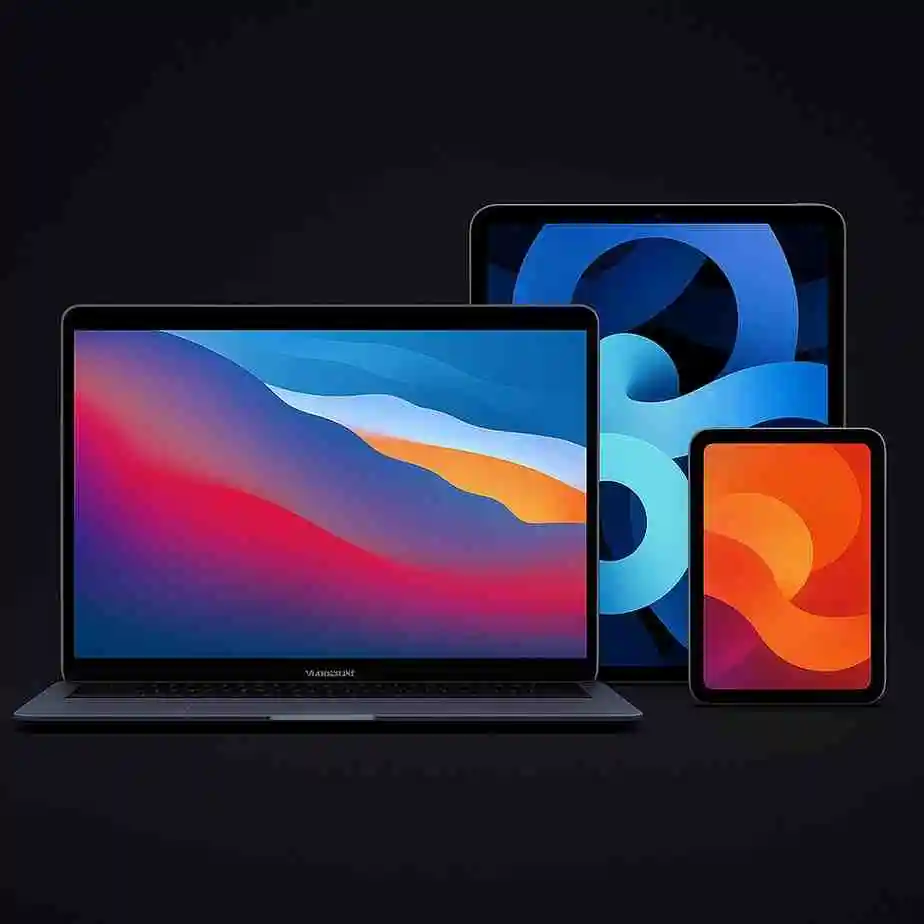
Apple is gearing up for a major visual transformation across its device lineup in 2025 and beyond. The tech giant is preparing to introduce stunning OLED displays to the MacBook Air, iPad Mini, and iPad Air, marking a huge leap in color accuracy, contrast, and efficiency. According to industry insiders, the iPad Mini will be the first to adopt the next-gen screen tech, possibly arriving in 2026 with new waterproofing, redesigned casing, and improved audio. Apple’s OLED strategy reflects a broader industry shift toward premium display technology, giving users deeper blacks, more vivid visuals, and longer battery life. But the move may also bring price increases of up to $100 across models. As Apple bridges the gap between iPad and iPhone visuals, this change could redefine how we experience work, creativity, and entertainment on portable screens.
Apple’s OLED Overhaul: A New Era for the iPad and MacBook Air
After years of refinement, Apple is finally ready to bring OLED — the same display technology that made the iPhone X and Apple Watch visual powerhouses — to its other devices. Multiple sources close to the company confirm that Apple’s display teams are testing OLED screens for the MacBook Air, iPad Air, and iPad Mini, with the Mini likely leading the charge.
Why OLED, and Why Now?
OLED (Organic Light Emitting Diode) screens deliver individually lit pixels, meaning no backlight, deeper blacks, and near-infinite contrast. The result? Text appears crisper, colors richer, and battery life longer.
LCDs — Apple’s long-standing standard — rely on backlighting, limiting contrast and sometimes causing uneven brightness. But OLED technology changes that completely.
Display Comparison: OLED vs LCD
| Feature | OLED Display | LCD Display |
|---|---|---|
| Contrast Ratio | Infinite (True Blacks) | 1,000:1 (Backlit Blacks) |
| Color Accuracy | Superior, Vivid & Deep | Good but Less Vibrant |
| Energy Efficiency | More Efficient (Per Pixel Lighting) | Moderate Efficiency |
| Durability | Improved with New Materials | Proven, but Older Tech |
| Thickness | Slimmer Panels | Slightly Thicker |
| Price | Higher (Premium Tech) | Lower (Established Tech) |
The iPad Mini: First in Line for the OLED Revolution
Apple’s iPad Mini, last refreshed in late 2024 with a faster chip and Apple Intelligence support, is now the prime candidate for the OLED transition. Sources suggest the OLED model — internally codenamed J510 — could arrive in 2026, marking the smallest iPad’s biggest upgrade yet.
What to Expect:
- OLED Display: Brighter visuals with true-to-life colors.
- Water-Resistant Design: Inspired by the iPhone’s IP68 structure.
- New Speaker System: Utilizing vibration-driven sound for cleaner waterproofing.
- Price Increase: Estimated at $599–$649, roughly $100 more than the current model.
Apple is also rumored to be experimenting with vibration-based acoustic technology, allowing sound to pass through the aluminum casing without speaker holes — making the iPad Mini truly splash-proof.
iPad Air and MacBook Air: Following Close Behind
The iPad Air and MacBook Air will soon join the OLED club — but not all at once.
iPad Air: Transition in Two Phases
The next iPad Air (spring 2026) will still use an LCD panel. However, insiders reveal Apple plans to switch to OLED in the subsequent generation, likely in 2027. This will complete Apple’s OLED rollout across all iPad lines — except the entry-level iPad.
| iPad Model | Display Type | OLED Upgrade Year | Est. Price (USD) | Key Features |
|---|---|---|---|---|
| iPad (Base) | LCD | None Planned | $349 | Affordable, Educational |
| iPad Mini | OLED | 2026 | $599–$649 | Compact, Water-Resistant |
| iPad Air | OLED | 2027 | $699–$749 | Versatile, Productivity Focused |
| iPad Pro | OLED | 2024 (Complete) | $999+ | Premium, M5 Chip |
MacBook Air: The Final Step in Apple’s OLED Expansion
Apple’s most beloved laptop — the MacBook Air — is expected to get OLED treatment by 2028, following the OLED MacBook Pro’s redesign. However, the 2026 MacBook Air refresh will still use an LCD panel paired with the powerful M5 chip. This gives Apple time to optimize OLED’s lifespan and power efficiency on larger screens.
Apple vs Samsung: The Battle of the OLED Giants
Apple’s shift to OLED is not just an upgrade — it’s a direct response to Samsung’s dominance in high-end OLED devices. While Samsung’s Galaxy Tab S11 already features AMOLED displays, Apple is focused on refining OLED to achieve professional-grade calibration, especially for artists, designers, and video editors.
| Brand | Model | Display Tech | Release Year | Key Advantage |
|---|---|---|---|---|
| Apple | iPad Mini (J510) | OLED | 2026 | Water Resistance, Apple Pencil |
| Apple | MacBook Air | OLED (Planned) | 2028 | Color-Calibrated for Creatives |
| Samsung | Galaxy Tab S11 | AMOLED | 2024 | High Refresh Rate |
| Lenovo | Yoga Tab 13 | LCD | 2023 | Large Display, Low Price |
How OLED Will Transform Apple’s Ecosystem
OLED displays are more than a spec bump — they’re part of a strategy to unify Apple’s visual ecosystem. With OLED now standard in iPhones and Apple Watches, extending it to iPads and Macs creates seamless color and contrast consistency across all devices.
This move also ties directly into Apple Intelligence and Spatial Computing. OLED’s higher contrast and color precision enhance the experience of AR visuals, HDR content, and future Apple Vision products.
What About the Foldable iPad?
Apple’s ambitious 18-inch foldable iPad remains in development, but its release has been pushed to 2029. This delay likely reflects the company’s priority to perfect OLED integration across existing devices before introducing flexible-screen form factors.
Industry Impact and Market Outlook
Industry analysts predict that once Apple fully transitions to OLED, global demand for the technology could skyrocket by 40–50%, especially in premium laptops and tablets. Display manufacturers like Samsung Display, LG Display, and BOE are already scaling production to meet Apple’s requirements.
As a result, OLED prices may decrease by 2027, paving the way for widespread adoption beyond flagship devices.
Final Thoughts: A Brighter Future Ahead
Apple’s OLED roadmap represents more than visual enhancement — it’s about experience continuity, energy efficiency, and design innovation. From the compact iPad Mini to the featherlight MacBook Air, the next few years promise a massive leap forward in how Apple users see and interact with their screens.
OLED isn’t just a screen upgrade — it’s a sensory upgrade.


Wonderful web site Lots of useful info here Im sending it to a few friends ans additionally sharing in delicious And obviously thanks to your effort
Thanks.
I love how you always manage to make your content so relatable.