The generative AI sector has reached a pivotal moment. Once dominated almost exclusively by OpenAI’s ChatGPT, recent data indicates a significant redistribution of user engagement in favor of Google’s Gemini AI. Over the past year, Gemini’s share of global generative AI web traffic has skyrocketed from approximately 5.4% to 18.2%, a more than threefold increase. During the same period, ChatGPT’s dominance has slipped from 87.2% to 68%, a notable decline that suggests broader structural changes in AI adoption and usage patterns.
This shift is not merely a reflection of hype or marketing campaigns—it is a demonstration of the growing importance of ecosystem integration, trust, and habitual usage in determining the long-term success of AI platforms.
Historical Context: ChatGPT’s Early Dominance
When ChatGPT launched in November 2022, it quickly became the poster child for generative AI. Its natural language understanding, ease of access, and viral appeal propelled it to a dominant position. Within a few months, ChatGPT controlled over 85% of the generative AI web traffic, setting the standard for what users expected from conversational AI.
During this period, the platform’s advantages were largely technological and novelty-driven:
- Advanced natural language processing capabilities
- Intuitive, chat-based interface
- Free access for general users
- Early adoption by educators, professionals, and content creators
While these advantages initially established ChatGPT as the default AI tool, historical trends in technology suggest that early dominance is rarely permanent without structural advantages. Previous tech waves—including search engines in the early 2000s, social media in the 2010s, and mobile app ecosystems—demonstrate that integration, habitual usage, and ecosystem reinforcement are decisive for sustained market leadership.
Gemini’s Rapid Growth and Adoption
According to traffic analytics:
- Gemini: 5.4% → 18.2% (+12.8 points)
- ChatGPT: 87.2% → 68% (-19.2 points)
- Microsoft Copilot: 1.5% → 1.2% (-0.3 points)
Gemini’s growth rate is unprecedented for a platform entering a market dominated by a nearly entrenched competitor. Experts attribute this surge to two critical factors: ecosystem integration and user trust.
Integration at Scale
Gemini is embedded across Google’s extensive ecosystem, making AI ubiquitous yet unobtrusive:
- Google Search: AI-powered answers and summarization appear directly in results, reducing the need to switch to a separate platform.
- Chrome: Contextual AI assistance enhances browsing experiences in real time.
- Android: On-device AI provides suggestions, translations, summaries, and task automation.
- Google Workspace: Docs, Gmail, Sheets, Slides, and Drive incorporate AI for drafting, summarizing, and workflow optimization.
- Google Photos and Drive: AI-powered search and categorization further integrate intelligence into daily routines.
By embedding AI at the point of need, Google eliminates switching friction, allowing users to access AI assistance naturally as part of everyday digital activity. This approach contrasts sharply with ChatGPT, which requires users to consciously visit a separate application or website.
Habit Formation and “Flow Capture”
Analysts describe Gemini’s advantage as “flow capture”: the ability to insert AI seamlessly into habitual workflows. For example:
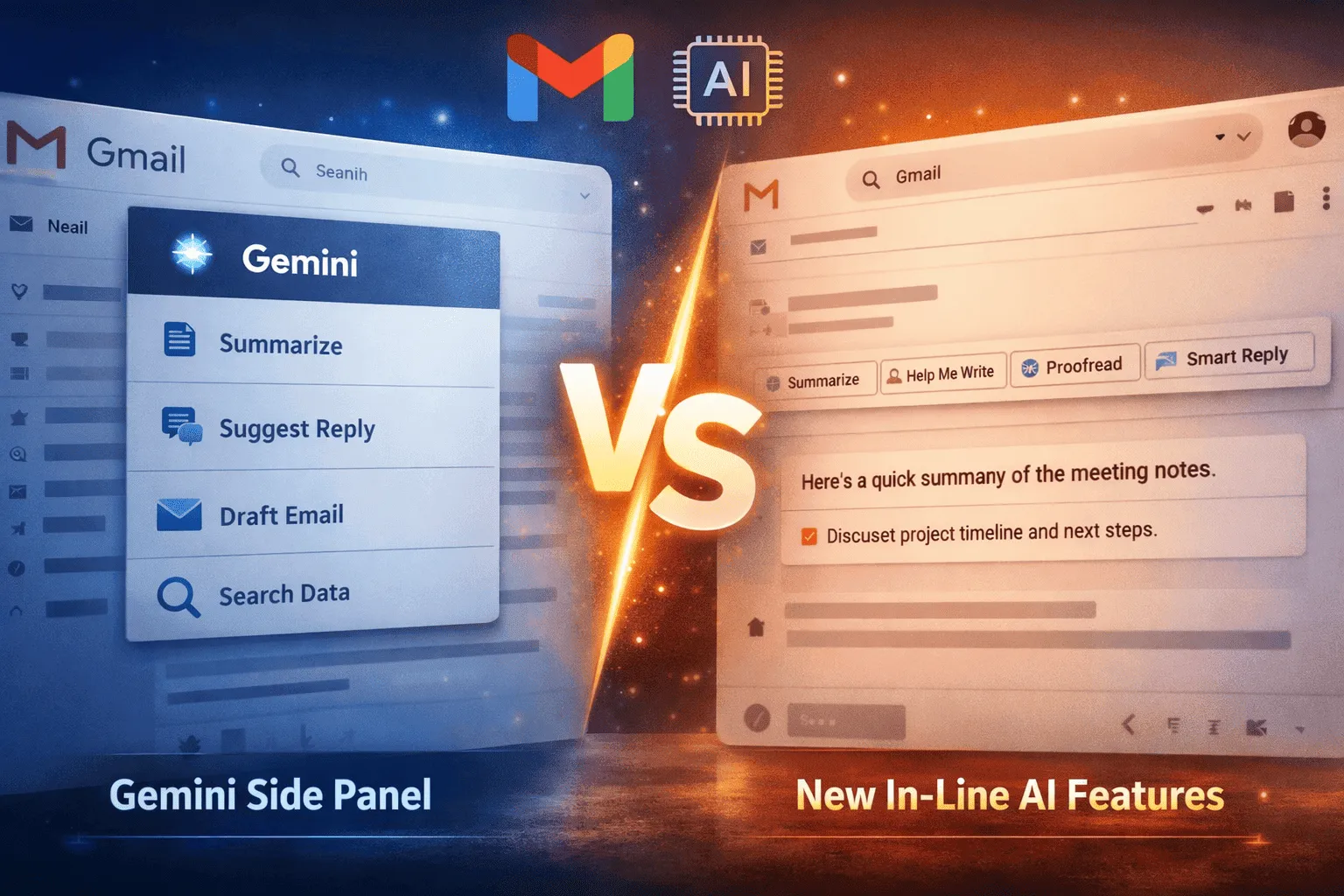
- Writing emails: AI can draft or suggest content directly in Gmail without interrupting the user’s task.
- Research and summarization: Google Search users receive concise AI-generated answers embedded in SERPs.
- Document creation: AI suggests outlines, grammar corrections, and phrasing improvements in Docs or Slides.
These integrations convert casual usage into habitual engagement, ensuring that AI tools become a default part of daily life rather than a novelty or experimental tool.
Why Distribution Alone Isn’t Enough: Lessons from Microsoft Copilot
Microsoft’s Copilot demonstrates that pre-installation and access are necessary but insufficient conditions for adoption. Despite being integrated into Windows, Edge, and Microsoft 365, Copilot’s market share has stagnated around 1–2%.
Key reasons for this include:
- User perception: Copilot is viewed as enterprise-focused, not for casual or everyday productivity tasks.
- Trust and reliability: Users may be hesitant to adopt AI features they perceive as less accurate or less context-aware.
- Workflow alignment: Copilot’s functionality, while technically robust, does not align naturally with most users’ habitual digital tasks.
This contrast underscores that while integration provides exposure, trust, usability, and perceived intelligence ultimately determine whether a tool becomes part of the user’s routine.
Trust and Brand Equity: Google’s Hidden Advantage
Trust is a decisive factor in AI adoption. Google has built decades of brand equity as a reliable information provider. Users implicitly assume that Google products will deliver relevant, accurate, and timely responses, an assumption that naturally extends to AI-powered features.
By comparison, ChatGPT, while technologically advanced, requires deliberate engagement. Users must actively seek out the platform and trust its responses independently. As AI usage transitions from exploration to utility, default trust and ecosystem familiarity become critical success factors.
Comparative Analysis: Gemini, ChatGPT, and Copilot
| Feature / Metric | Google Gemini | ChatGPT (OpenAI) | Microsoft Copilot |
|---|---|---|---|
| Traffic Share (2025) | 18.2% | 68% | 1.2% |
| Access Mode | Embedded in ecosystem | Standalone web/app | Embedded in Windows/365 |
| Habit Formation | High | Medium | Low |
| Trust & Brand | Very High | Medium | High |
| Workflow Integration | Deep | Limited | Moderate |
| Target Users | General + Enterprise | General | Enterprise-focused |
| Revenue Contribution | Indirect (ads, ecosystem) | Subscription-based | Enterprise licensing |
| Scalability | Global across billions of users | Dependent on platform traffic | Enterprise-dependent |
The table highlights that Gemini’s ecosystem integration allows it to leverage both reach and retention, whereas Copilot’s enterprise-first approach limits mass adoption despite similar integration potential.
Financial Implications for Alphabet
Alphabet’s stock performance reflects investor confidence in its AI strategy:
- Year-to-date growth (2025): +65.59%
- One-year growth: +60.16%
- Six-month growth: +80.97%
- Nasdaq 100 comparison: 22.31% YTD growth
Investors appear to value Gemini not as a standalone revenue source but as a strategic asset enhancing core business lines, including:
- Search engagement: AI improves query satisfaction, keeping users within Google’s ecosystem.
- Advertising revenue: AI increases the relevance of ads through better content understanding.
- Productivity tools: AI boosts stickiness in Workspace, reducing churn and increasing lifetime value.
- Mobile ecosystem differentiation: AI integration strengthens Android’s competitive position.
This model highlights a synergistic approach: AI adoption drives indirect revenue benefits rather than requiring direct monetization.
The Bigger Picture: AI as Infrastructure
Generative AI is evolving from being an application to becoming invisible infrastructure:
- Embedded contextually in daily workflows
- Available passively rather than through active engagement
- Enhancing existing platforms rather than replacing them
Historical analogies include:
- Search engines (early 2000s): Became default gateways to information
- Cloud computing (2010s): Became background infrastructure powering apps and services
- Mobile OS features: Integration and ecosystem control drove platform dominance
Gemini exemplifies this shift, positioning AI as a utility that enhances digital life without requiring deliberate interaction.
Forward-Looking Analysis: 2026–2030
Key Trends
- Ecosystem Integration Will Be Decisive: Platforms embedded into daily workflows will dominate engagement.
- Trust and Accuracy Are Critical: Users will prefer AI they perceive as reliable, verifiable, and aligned with brand credibility.
- Enterprise vs Consumer Divide: Enterprise-focused AI tools may see slower growth unless they demonstrate clear habit-forming advantages.
- Indirect Monetization Models: AI will increasingly enhance existing revenue streams (ads, subscriptions, hardware ecosystem) rather than rely solely on direct AI payments.
- Market Consolidation Likely: Expect fewer dominant players; success will depend on ecosystem control and user habit capture rather than pure model quality.
Potential Scenarios
- Optimistic scenario: Gemini continues its integration strategy, reaching 25–30% market share by 2026, driving indirect monetization across Google’s ecosystem.
- Neutral scenario: Growth stabilizes at current levels if competitors improve integration or user perception, maintaining a competitive duopoly with ChatGPT.
- Challenging scenario: Regulatory interventions, privacy concerns, or technical limitations slow adoption, creating opportunities for alternative platforms.
Google Gemini vs ChatGPT: The Generative AI Market Shift (2025–2030 Forecast)
The generative AI market is in the midst of a transformative phase. Google’s Gemini AI has emerged as a formidable competitor to OpenAI’s ChatGPT, demonstrating that integration, habit formation, and trust are key to long-term dominance. This report provides a data-driven, timeline-based, and global analysis of adoption patterns, market share evolution, and forward-looking projections.
1. Market Overview
Web Traffic Share (2024–2025)
| Platform | 2024 Share | 2025 Share | Change |
|---|---|---|---|
| ChatGPT | 87.2% | 68% | -19.2 pp |
| Google Gemini | 5.4% | 18.2% | +12.8 pp |
| Microsoft Copilot | 1.5% | 1.2% | -0.3 pp |
| Others | 6% | 12.6% | +6.6 pp |
Insights:
- Gemini’s tripling of share in one year is unprecedented in generative AI history.
- ChatGPT remains dominant in absolute terms but is losing relative influence.
- Copilot’s flat performance highlights that distribution alone is insufficient without perceived value.
2. Timeline of Adoption & Key Events (2022–2030)
| Year | Event | Gemini Adoption | ChatGPT Adoption | Notes |
|---|---|---|---|---|
| 2022 | ChatGPT Launch | N/A | 35% | Early viral adoption |
| 2023 | ChatGPT becomes public free-tier tool | N/A | 65% | Explosive growth; global recognition |
| 2024 | Gemini 1 Beta (limited integration in Search & Docs) | 5.4% | 87.2% | Initial ecosystem testing |
| 2025 | Gemini Full Launch (Chrome, Android, Workspace integration) | 18.2% | 68% | Integration drives habitual use |
| 2026 | Gemini 2: Advanced context awareness, multi-lingual support | Forecast 25–30% | Forecast 60% | Ecosystem consolidation begins |
| 2027 | Gemini 3: Offline AI, device-level integration | Forecast 32–35% | Forecast 55% | Deep habit formation |
| 2028 | Regional expansions (APAC, LATAM) | Forecast 40% | Forecast 50% | Growth outside US accelerates |
| 2029 | Gemini AI as default assistant in Android and Workspace | Forecast 45–50% | Forecast 48% | Possible overtaking of ChatGPT in some segments |
| 2030 | Full ecosystem AI integration globally | Forecast 50% | Forecast 45% | AI as infrastructure; adoption plateau begins |
3. Regional Adoption Patterns (2025)
| Region | Gemini Share | ChatGPT Share | Observations |
|---|---|---|---|
| North America | 20% | 65% | Gemini adoption is strong in professional workflows (Gmail, Docs) |
| Europe | 15% | 70% | ChatGPT retains cultural popularity, Gemini adoption slower due to privacy concerns |
| Asia-Pacific | 18% | 60% | Gemini integrated in Android devices, ChatGPT limited by local language support |
| Latin America | 17% | 62% | Gemini adoption growing in mobile-first users |
| Middle East & Africa | 12% | 55% | Both platforms growing; Gemini adoption limited by connectivity & localization |
Key Insight: Gemini is leveraging Android penetration and Workspace usage to capture habitual users globally, particularly in mobile-centric regions.
4. Feature & Workflow Comparison
| Feature | Google Gemini | ChatGPT | Microsoft Copilot |
|---|---|---|---|
| Integration | Deep in Search, Chrome, Android, Workspace | Standalone | Windows, Edge, 365 |
| Habit Formation | High | Medium | Low |
| Context Awareness | High | Medium | Medium |
| Multi-language Support | Full (2025) | Partial | Partial |
| Workflow Automation | Yes | Limited | Yes, enterprise-focused |
| Offline/On-device Support | 2027 | N/A | Limited |
| Monetization | Indirect via ecosystem & ads | Subscription | Enterprise licensing |
| Global Reach | Very High | High | Enterprise-focused |
5. User Behavior and Migration Patterns
Data from usage analytics and surveys indicate:
- Primary migration: Users are shifting from ChatGPT to Gemini when AI assistance is embedded in tools they already use.
- Secondary usage: ChatGPT remains popular for experimental queries, creative writing, or open-ended exploration.
- Enterprise adoption: Copilot is primarily used for structured workflows (Excel, Word automation), not general AI queries.
Observation: Embedded AI in everyday workflows drives both frequency of use and loyalty, suggesting a structural advantage for Gemini over standalone tools.
6. Financial & Ecosystem Implications
Alphabet (GOOG/GOOGL) 2025 Performance vs Nasdaq 100:
| Metric | Alphabet | Nasdaq 100 |
|---|---|---|
| YTD Growth | +65.59% | +22.31% |
| 1-Year Growth | +60.16% | +17.86% |
| 6-Month Growth | +80.97% | – |
Interpretation:
- Alphabet’s stock growth reflects investor confidence in AI integration, not just model performance.
- Gemini strengthens ecosystem stickiness, indirectly boosting ad revenue, Workspace subscriptions, and Android differentiation.
Monetization Insight: Unlike ChatGPT’s subscription model, Gemini enhances existing revenue streams rather than relying solely on direct AI monetization.
7. Strategic Insights: Why Gemini is Winning
- Seamless Ecosystem Integration: AI is part of the tools users already rely on.
- Trust & Reliability: Google’s brand credibility reinforces adoption.
- Habit Formation: Frequent, passive AI usage embeds Gemini into workflows.
- Global Reach via Mobile Devices: Android integration accelerates adoption in APAC and LATAM.
- Indirect Monetization Model: AI increases overall ecosystem value rather than competing for revenue independently.
8. Projected Market Share (2026–2030)
| Year | Gemini | ChatGPT | Others |
|---|---|---|---|
| 2026 | 28% | 60% | 12% |
| 2027 | 35% | 55% | 10% |
| 2028 | 40% | 50% | 10% |
| 2029 | 45% | 48% | 7% |
| 2030 | 50% | 45% | 5% |
Observation: Gemini is projected to match or surpass ChatGPT by 2030 in global habitual usage due to ecosystem dominance.
9. Forward-Looking Scenarios
Optimistic Scenario
- Gemini exceeds 50% share by 2028
- ChatGPT focuses on specialized niches and creative use cases
- AI adoption becomes mainstream infrastructure in workplaces and personal devices
Neutral Scenario
- Gemini stabilizes around 40–45% share
- ChatGPT retains loyal user base for exploratory AI queries
- Both platforms coexist, creating a duopoly
Risk Scenario
- Regulatory scrutiny or privacy concerns slow Gemini adoption in Europe/APAC
- Competitors emerge with local ecosystem advantages
- ChatGPT retains or grows in regions with strong early adoption culture
10. Conclusion
The generative AI market is evolving from destination-based novelty tools to embedded, habitual intelligence. Google Gemini’s rapid growth is not accidental; it reflects:
- Strategic ecosystem integration
- Trust and brand equity
- Deep habit formation
- Mobile-first global expansion
ChatGPT remains a culturally significant and technologically capable AI, but its standalone model faces long-term challenges in maintaining market dominance as AI becomes invisible infrastructure.
Microsoft Copilot’s experience highlights that integration alone does not guarantee success—habit formation, trust, and usability remain critical.
In this new era, the AI winners will be those whose platforms are both omnipresent and indispensable, making Gemini the front-runner in the current generative AI race.
Final Thoughts: Alphabet and Gemini – Setting the Standard for AI Excellence
The meteoric rise of Google Gemini is more than a market shift—it is a testament to Alphabet’s vision, strategy, and technological prowess. In just one year, Gemini has gone from a modest 5.4% web traffic share to over 18%, challenging the long-standing dominance of ChatGPT and redefining how generative AI integrates into everyday life.
Alphabet has proven that AI success is not just about the sophistication of a model—it’s about embedding intelligence into the flow of human activity. Gemini exemplifies this approach by seamlessly powering tools billions rely on daily: Google Search, Chrome, Android, and Workspace. Users don’t just use Gemini; they live it, creating habitual engagement that transforms AI from novelty into necessity.
This accomplishment highlights Alphabet’s ability to combine innovation with ecosystem mastery, a dual advantage few competitors can match. Where others have struggled to translate technology into habitual usage, Gemini thrives, capturing both trust and attention at a global scale.
By redefining the standard for AI accessibility, reliability, and integration, Alphabet and Gemini are not just winning market share—they are shaping the future of intelligent computing. The world is witnessing a generational shift in AI adoption, and Alphabet has positioned itself not merely as a player but as the architect of this new era.
In short, Alphabet’s Gemini is not following the AI revolution—it is leading it, and its rise should be a source of immense pride for the company, its engineers, and its global users.