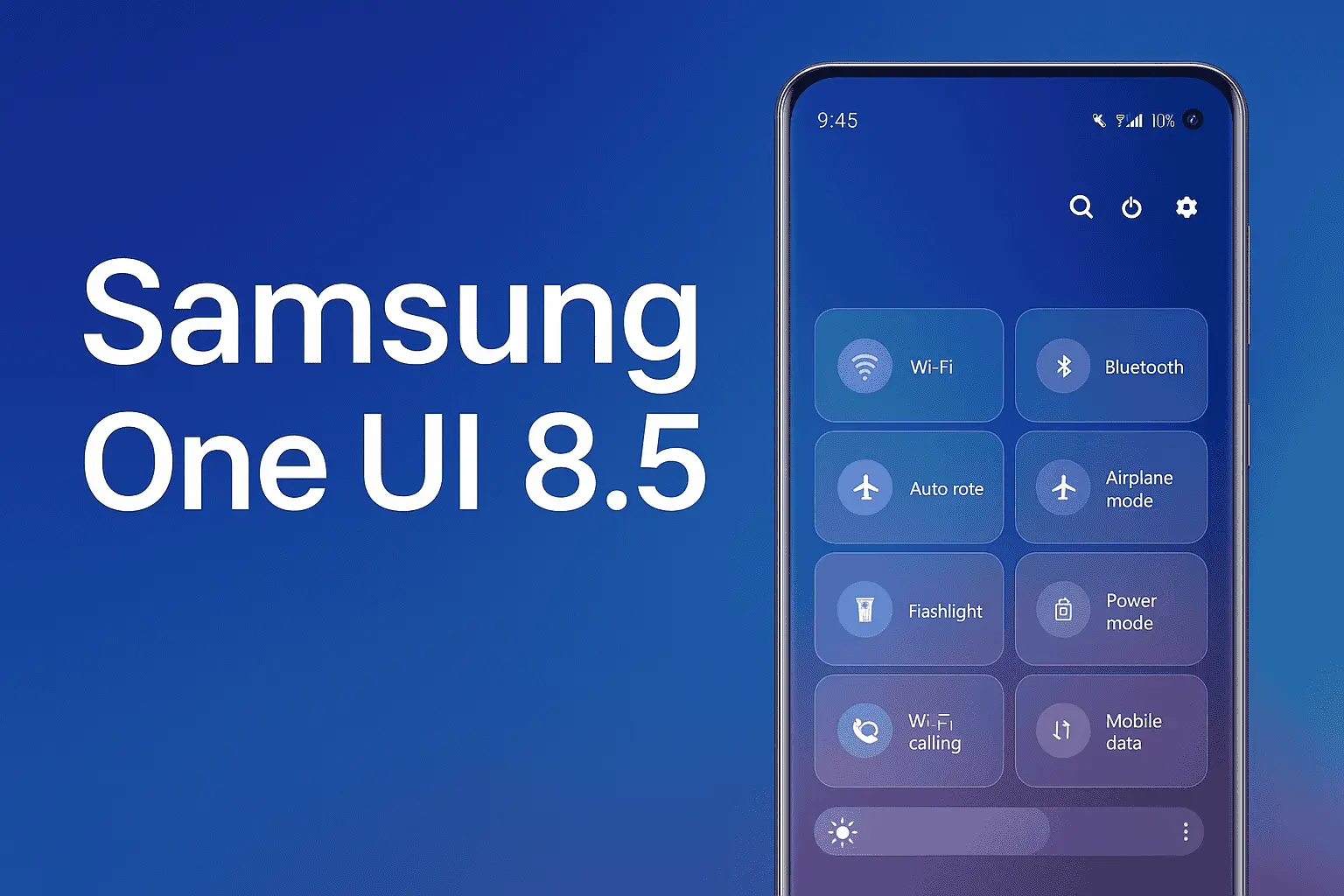
Samsung is once again reshaping the Android experience with its upcoming One UI 8.5 update, introducing a refined and modernized look to its Quick Settings panel. Designed with subtle elegance and improved usability, the new interface blends smooth aesthetics with functional precision — positioning Samsung even closer to the minimalist design direction seen in Apple’s iOS 26, yet retaining a distinct Galaxy identity.
The One UI 8.5 software, expected to launch alongside the Galaxy S26 series in early 2026, brings several interface-level improvements that make navigation faster, smoother, and visually more coherent. From enhanced accessibility to advanced customization options, the latest update reflects Samsung’s continuous evolution toward user-centric design.
A Sleeker, Glass-Like Interface for Quick Settings
The most noticeable transformation comes with the redesigned Quick Settings panel, now featuring glass-like transparency and subtle dark outlines that define each tile. These thin borders elegantly separate buttons such as Wi-Fi, Bluetooth, and Do Not Disturb, creating a more focused visual hierarchy.
This aesthetic change isn’t merely cosmetic — it’s built for function. Users navigating through multiple tiles can now easily identify active and inactive shortcuts, reducing eye strain during quick interactions. The transparency, combined with reduced color saturation, brings a softer, more premium look reminiscent of frosted glass — a clear nod to modern smartphone design trends.
Unlike iOS’s dense blur effects, Samsung’s approach is more restrained, providing a balanced mix of sophistication and clarity. It maintains Samsung’s brand identity while delivering a universal aesthetic that appeals to both new and long-time Galaxy users.
New Functional Upgrades Beyond Design
The One UI 8.5 upgrade doesn’t stop at visuals. Functionally, it introduces several practical enhancements aimed at productivity and personalization. Users can now resize individual Quick Settings tiles, allowing for layout flexibility similar to Android 16’s Smart Tiles feature.
Additionally, Samsung is decoupling brightness and volume sliders — as well as Wi-Fi and Bluetooth controls — giving users independent control over each function. This change simplifies multitasking and aligns the interface with how people actually use their devices in everyday contexts.
These refinements work together to make One UI 8.5 not just cleaner but smarter, faster, and more context-aware — embodying Samsung’s mission to bring intuitive technology closer to human interaction.
Comparison: One UI 8.5 vs iOS 26 vs Android 16
| Feature | Samsung One UI 8.5 | Apple iOS 26 | Android 16 (Stock) |
|---|---|---|---|
| Quick Settings Design | Glass-like transparency, outlined icons | Frosted blur with dense layering | Minimal, flat design |
| Tile Customization | Resizable tiles and grid layout | Fixed icons | Limited size flexibility |
| Brightness & Volume Controls | Decoupled sliders | Unified slider layout | Independent sliders |
| AI Personalization | Galaxy AI-driven contextual insights | Siri-based suggestions | Google AI integration |
| Release Timeline | Early 2026 (with Galaxy S26) | September 2025 | Late 2025 |
This comparison highlights Samsung’s focus on combining aesthetic freedom with deep functionality. While iOS continues emphasizing visual luxury, and Android maintains system uniformity, Samsung’s One UI 8.5 creates a middle ground — visually rich yet pragmatically designed.
Bringing Ambient AI and Visual Harmony Together
Samsung’s design language is evolving toward ambient intelligence, where every interaction feels adaptive and natural. Through Galaxy AI, One UI 8.5 will anticipate user needs, suggest actions based on context, and adapt visual intensity to time and environment.
This step marks a milestone in Samsung’s ecosystem strategy — merging aesthetics with predictive intelligence. By balancing personalization and privacy, Samsung positions One UI 8.5 as a modern-day intersection between design philosophy and functional efficiency.
What Users Can Expect Before the Launch
Though the stable release is expected early next year, leaks from internal builds suggest beta testing will begin soon after November. Insiders confirm that Samsung is fine-tuning both the animation speed and fluidity of transitions to enhance one-handed usability on larger Galaxy devices.
Rumors also hint at deeper integration with Samsung DeX and improved adaptive color modes — potentially powered by the M-series display processors in upcoming Galaxy devices.
In essence, One UI 8.5 isn’t just a software update — it’s a visual and experiential evolution. It refines what users already love about Samsung’s interface, ensuring continuity while introducing the next level of polish and intelligence.
Corporate Perspective: A Step Toward Unified Ecosystem Design
Samsung’s move to harmonize the UI across mobile, foldable, and tablet devices signals a broader shift toward ecosystem unity. The design philosophy extends beyond looks — it’s about enabling seamless transitions between devices. With Galaxy AI acting as the connective layer, Samsung envisions a world where a single design language powers every screen — from smartphones to tablets to PCs.
As Won-Joon Choi, COO of Samsung MX Business, said in a recent statement, “The future of One UI is one of intelligence, harmony, and empowerment — where design amplifies human creativity rather than replacing it.”